
Designing an efficient coffee counter is essential for improving productivity, service quality, and the customer experience. A well-designed counter optimizes staff workflows, enhances the professional bar furnishings, and reduces waiting times. In this article, we explore the functions, essential components, and customization options for a coffee counter that truly works.
Key Functions of the Coffee Counter
The coffee counter has three main functions: beverage preparation, customer service, and management of the workspace. During the design phase, it’s essential to balance aesthetics and functionality to ensure speed and consistency in service. An organized counter reduces unnecessary steps, promotes consistent coffee quality, and improves hygiene.
A second key role is visual communication: the coffee counter serves as a showcase for the brand. Materials, finishes, and the layout of elements help create a professional image, in line with the chosen professional café furnishings. Finally, the counter must support staff safety and ergonomics, minimizing repetitive strain and the risk of accidents.
Essential Components
For a functional and durable coffee counter, some elements are necessary:
• Professional espresso machine: the heart of the coffee counter; its selection and placement influence workflow and product quality.
• Grinder-doser: essential for consistent dosing and fast service.
• Sink and washing station: necessary for quickly sanitizing portafilters, pots, and accessories.
• Durable countertop: stainless steel or composite materials that withstand heat and frequent cleaning.
• Refrigeration: refrigerated units for milk and fresh ingredients, positioned near the machine to minimize movement.
• Storage for cups and accessories: heated shelves for cups, capsule holders, or stands for take-away cups.
• Neutral drawers and containers for consumables: to keep the area organized and supplies readily accessible.
• Targeted lighting: assists staff and highlights the preparation area.
• Waste disposal solutions: bins, coffee hoppers and waste hoppers for the proper separation of waste, positioned discreetly and functionally.
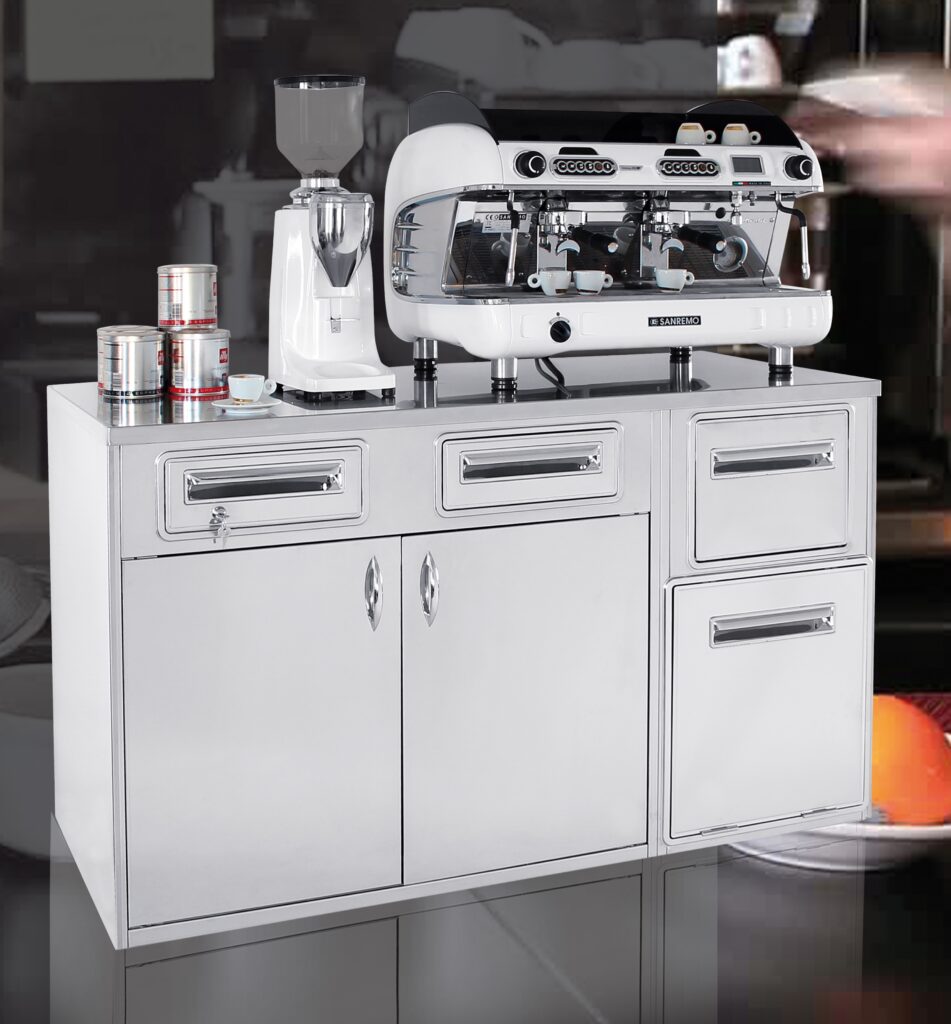
Customization and Workflows
Customising a coffee counter means adapting it to the venue’s concept and operational requirements. Professional bar furniture must be designed with workflows in mind: analysing staff movements (taking orders, preparation, serving) helps to minimise the number of steps and speed up service times.
Practical tips:
- Clear zoning: separate ‘hot’ areas (espresso machine, hot plate) from ‘cold’ areas (refrigeration, storage) to avoid interference.
- Ergonomic layout: place the most frequently used tools within easy reach to minimise unnecessary movements.
- Modularity: choose furniture and equipment that can be reconfigured to suit peak periods or seasonal demands.
- Technological integration: POS systems, ordering systems and stock management software improve efficiency and cost control.
- Visual identity: customise finishes, colours and details to convey the brand’s value without compromising functionality.
- Counter size: the width, depth and height of the coffee counter must be carefully considered to harmonise with the bar’s furnishings and tailored to the service you intend to offer.
Designing a professional coffee counter requires a balance of functionality, ergonomics and design: choosing the right components, planning workflows and customising the professional bar furnishings are important steps towards increasing efficiency and customer satisfaction. If you’d like a bespoke consultation for your venue or a quote for a bespoke coffee counter, please contact us: our experts will help you design a high-performing space that reflects your identity.